Three terms we keep apart
A forecast is a dated statement by a named person or organisation about what is coming. For us it is raw material. We check it. We don't adopt it.
A signal is observable evidence. A named company acts, a metric moves, a rule changes. With a date and a source.
A trend is our judgement when forecast, evidence and German context fit together. A human makes that call.
Lead time
The measured distance to markets that got there first
Much of what is sold as new in Germany has often already happened somewhere else in the world. In London, in Shenzhen, in Seoul, in California. We look at wherever a thing is further along, and translate what that means for a decision on a German board.
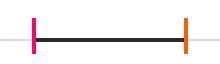
Where we can, we measure the gap. For that we need surveys that measure the same thing in both markets: the same publisher, the same question, the same unit. Then we read off when the other market reached a given level and when Germany reaches the same level. The gap between the two dates is the lead time, in months.
Both dates are in public series, each with a publisher and a reference date. Where the level falls between two measurements, we read off the month in a straight line. Nothing else is estimated. If the other market was already above the level at the first measurement, the real gap is larger than the one read off. We list such series as a lower bound.
A market works as a comparison if it's similar enough to Germany: comparable incomes, comparable rules, statistics that measure the same thing. Then wealth and coverage can be ruled out as explanations, and what's left is behaviour.
The first series of this kind runs against Britain. The result: where everyday shopping, card payment and software move online, Germany arrives just under five years after Britain. That doesn't hold for everything. Germans buy computers and electronics online earlier, and Germany is ahead on direct debits, ERP software, solar power and electric cars. All 96 measurements are on the Lead time page.
Other questions need other comparisons, whether China, South Korea or California. Each one has to pass the same test, and every gap is shown with the market it was measured against.
Reckoning
Other people's forecasts, checked against dated evidence
We take a published forecast with a date and a deadline, from a firm that sold it. Before we look for evidence, we set down what counts as having come true and what doesn't. Only then do we search.
The result is a verdict, with its evidence and the date checked. A search that turns up nothing is not proof to the contrary. In that case the verdict is: not verifiable.
If a verdict changes, the change is shown with its date and reason. If the criteria were only set after the deadline had passed, the verdict counts towards no rate. Once you know the answer, you can't check blind any more.
And we check the quote itself. It isn't enough for us that a document exists and matches the subject. The quoted sentence has to be in it.
Hotspot
Early warning: what's heating up before everyone else sees it
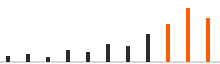
Over two hundred sources from the US, the UK, China and the DACH region, read every day, sorted by topic and weighted by movement. The machines do the first sort. A human makes the call.

Two-thirds of incoming articles match no tracked topic. As of 20 October 2026. Unit: articles in the signalmap corpus.
Whatever holds up becomes an observation: an article and a graphic, dated, with sources and with what it means for the German market.
Hotspot makes no predictions. It observes and judges, and we label it that way.
Arrival window
For an observation, we often estimate when the thing will arrive in Germany. That's an arrival window, and it's an editorial estimate. It's labelled as such every time.
What we're not claiming
We don't claim to be right more often than others. Nor that the others are always wrong.
We don't claim that Germany is behind across the board. And a gap only applies to the market it was measured against. We never average gaps to different markets.
Questions about the method: hello@signalmap.de